
How Is CO2 Used In Animal Slaughter?
In animal slaughter, CO2 is used to cause minimal harm to the welfare of the animal, it is crucial to use the correct CO2 concentrations. Insufficient CO2 concentrations mean that the livestock remain alert and conscious and if the CO2 concentration is too high relative to the O2 concentration at the beginning of the process, then pigs have been reported to show some signs of distress4. Therefore, to protect the welfare of these animals, there are stringent regulations about both the concentration levels of CO2 that must be used, and it is imperative that the environmental monitors used must be capable of reliably and accurately measuring such concentrations.
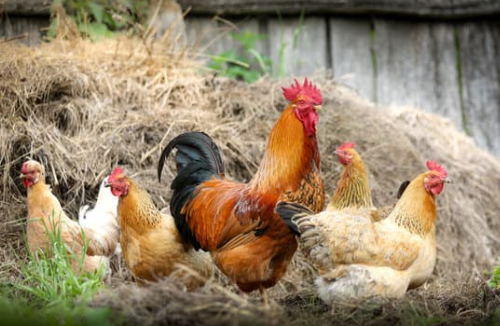
For herd animals like pigs, several animals are kept together in a chamber where the atmospheric gas mixture is rapidly changed to one suitable for stunning them. A similar approach can be used for poultry and other animals as well. In the UK, the Welfare of Animals (Slaughter or Killing) Regulations 1995 (WASK 95)5 specifically covers the gas mixtures that can be used for these purposes, and states that the carbon dioxide concentration must not exceed 30 %, as well as that devices must be used to measure by volume the maximum concentration, with audible warning systems should concentrations deviate from the legislated limits.
Carbon Dioxide Stunning Solutions from Edinburgh Sensors
Edinburgh Sensors, with their line of real-time gas monitors, has several options for devices well-suited for CO2-sensing for livestock stunning and slaughter including meat, pig and poultry processing. Both the Guardian and GasCard real-time monitors offer highly accurate, online sensing capability for CO2 with real-time data logging and the possibility to integrate the sensors with alarm features or other gas-monitoring sensors as required.

The Guardian NG series uses infra-red detection to give a CO2 detection range of 0 – 3000 ppm and 0 – 100 % volume. The on-screen device can be used either to monitor concentrations but also to set-up the device, which has an initial warm-up time of just one minute.
There are two alarm relays, as well as an alarm that can be set at any point of the detection range, that can be used to control additional devices e.g. in the case of gas slaughter, could be used to vary the gas concentrations as required to provide the optimum gas mixtures. The response time of the device is short enough (less than 30 seconds from the sample inlet) that it is suitable for the time-critical nature of detecting gas concentrations in the stunning process, important as the legislation specifies exactly how long livestock can be kept under certain atmospheric conditions.
With 2 % accuracy across the full range of detection, the device is also very robust as measurements are unaffected by 0 – 95% relative humidity. The use of the Guardian NG series for this particular application has been encouraged and recommended by Dr. Martin Wenzlawowics, Head of “BSI Schwarzenbek” for applied animal welfare at transport and slaughter.
The monitors can be mounted on the walls of the chamber where the livestock will be held as the Guardian NG series can detect gases from sampling points up to 30 meters away using their integral sampling system. All systems also come with the full technical and user support from Edinburgh Sensors 40 years of experience.
Find out More
For further information on our range of gas sensors or to find out how we can help with your carbon dioxide stunning requirements, please contact us. We’d be happy to be of assistance.
To keep up to date with news and articles from Edinburgh Sensors simply opt-in to our infrequent newsletter via the sign-up button below.
References
- Slaughter and Stunning, https://ec.europa.eu/food/animals/welfare/practice/slaughter_en, (accessed August 2018)
- C. Berg, M. Raj, Animals, 2015, 5, 1207-1219
- FMD Data Archive, http://footandmouth.fera.defra.gov.uk/, (accessed August 2018)
- Report, Stunning of slaughter pigs with CO2. A pilot research to the effect of adding O2 to a CO2 concentration on animal welfare, http://www.themeatsite.com/articles/contents/gas_stunning.pdf, (accessed August 2018)
- WKA Regulations, http://www.legislation.gov.uk/uksi/1995/731/contents/made, (accessed August 2018)
